
Kok-Zhailau Resort: What Will Happen to Water, Vegetation and Trees
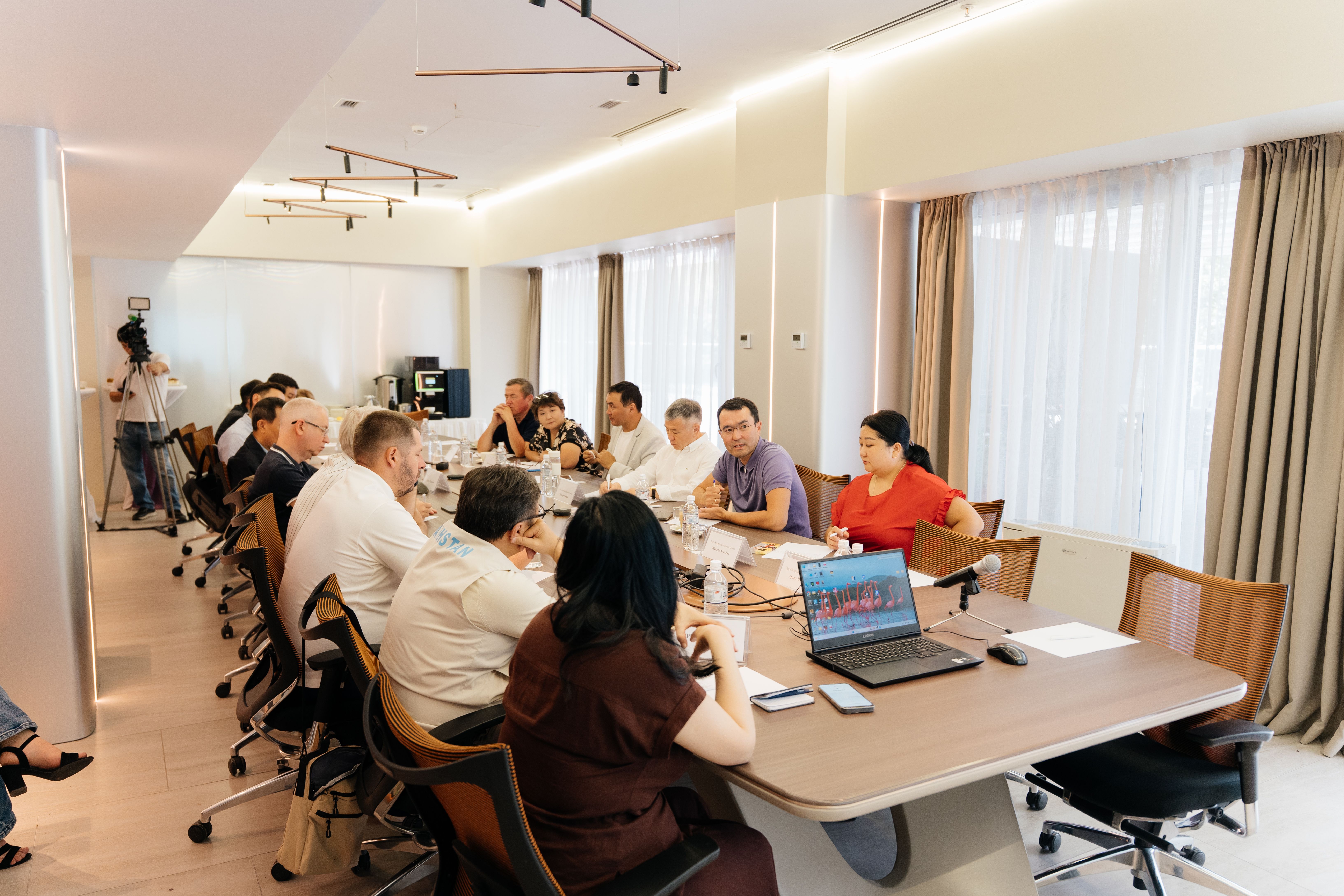
A meeting of the Coordination Council of the Ile-Alatau State National Nature Park was held in Almaty. Yerzhan Yerkinbayev, Chief Executive Officer of Kazakh Tourism Development, spoke about how construction of the Almaty SuperSki mountain resort in the Kok-Zhailau tract will be carried out. Representatives of the scientific community and relevant organizations took part in the discussion. The main topics included the project's potential impact on Almaty's water supply, vegetation, as well as the cost of the resort and access conditions.
“It is impossible to implement a large-scale project without affecting the natural environment”
According to Yerkinbayev, contractors are already working at the site. They are building temporary access roads, laying power supply lines, and restoring a transformer substation that was built about ten years ago. Yerkinbayev acknowledged that construction will inevitably affect the natural area. At the same time, he promised that the affected areas would subsequently be restored as much as possible, and that the progress of the works would be shown openly, with photographs from the site published regularly. “Whatever you do, construction and installation work is construction and installation work. Even when you hang a chandelier at home, there is dust. So we intend to tell the truth: we will excavate the soil and remove the turf. Everything will be done in accordance with scientific requirements, and everything will be restored afterward. But it is impossible to implement such a large-scale project without affecting the natural environment at all,” he said. According to Yerkinbayev, some of the concerns among residents arise from a lack of information. “The role of the Coordination Council and of those people who care about the project, ask questions and want to discuss it is very important. This helps us understand what concerns the public and provide clear answers without hiding anything,” he said.
The resort will not leave Almaty residents without drinking water
One of the main concerns among Almaty residents is the potential impact of the resort on the city's water supply. Yerkinbayev called claims about a possible shortage of drinking water unfounded. According to the data he cited, around 60% of Almaty's water comes from underground sources — the Almaty, Maly Almaty and Talgar deposits, as well as the Kamenskoye Plateau. The remaining 40% comes from mountain sources — the Bolshaya Almatinka and Malaya Almatinka rivers, Kim-Asar, Kargaly and Aksay. At the same time, there are no major water intake facilities on the Kazachka River supplying Almaty with drinking water. According to Yerkinbayev, a study by a specialized institute concluded that the river has sufficient resources. Even under maximum load, when around 500 snowmaking machines are operating simultaneously and the hotels are fully occupied, the resort would require no more than 14% of the river's flow. “The resort has no impact whatsoever on the sources that supply the city. Therefore, the water issue should be clearly addressed and put to rest,” he said. According to Yerkimbayev, Almaty's existing infrastructure can supply up to 1.2 million cubic meters of water per day, while actual consumption is around 600,000 cubic meters.
Scientists say Red Book plant species are outside the construction zone The vegetation survey was conducted by specialists from Al-Farabi Kazakh National University. According to the findings presented at the meeting, no plant species listed in the Red Book of Kazakhstan were found in the areas designated for the main construction works. Ostrowski's tulip, Albert's iris and Sievers' apple tree are found in the Kok-Zhailau tract. However, according to the researchers, they grow outside the construction zones. The future resort site also contains artificial European spruce plantations covering a total area of approximately 19 hectares. Some of the trees are planned to be transplanted, while others will have to be removed. According to Yerkinbayev, forestry specialists classified some of the spruce trees as sanitary-removal trees. Compensatory planting is planned for the trees that are removed. “Yes, the spruce is beautiful. Some of it will have to be removed because of construction and installation works, while some will be transplanted. But in any case, we will compensate for the losses — including trees that have dried out or have been classified for sanitary removal,” he said.
Environmental monitoring will continue after the resort opens
Project representatives have agreed with scientific organizations to conduct long-term environmental monitoring. Research is planned both during construction and after the resort begins operations. According to Yerkinbayev, specialists will monitor the resort's impact on water, soil, air, flora and fauna. Participants in the meeting proposed selecting several measurable environmental indicators and regularly publishing the results so that the public can assess the project's impact. Yerkinbayev supported the idea of publicly releasing the data. However, the specific list of indicators and the frequency of monitoring were not announced at the meeting.
French company POMA to build 11 cableways
Eleven cableways at the resort will be built by the French company POMA. According to Yerkinbayev, the contract provides for at least 30% local content. Structures and equipment that can be manufactured in Kazakhstan are to be produced domestically. The manufacturer itself will act as the general contractor for the cableways. POMA will be responsible for construction and turnkey commissioning of the facilities. “Often, a cableway is purchased from the manufacturer, and then a local construction company assembles the disassembled structure to the extent of its experience. We decided that this is too important a project. A company with a century of experience should take responsibility for it under its own name and stand behind its quality,” Yerkinbayev said.

No National Fund money is being used
Yerkinbayev denied reports that National Fund resources were being used for the project. According to him, the rumor arose due to a technical error and a subsequent mistranslation. “Under no circumstances is this project being financed from the National Fund. The project is being financed by funds from the Baiterek holding company,” he said. Free access promised for children and people with disabilities The resort will not be completely free of charge, as its operation and maintenance will require ongoing expenses. However, the project management has promised to introduce social tariffs. According to Yerkinbayev, free access is planned for schoolchildren and people with disabilities. Affordable prices are to be introduced for students and pensioners. Children's skiing lessons and certain summer activities may also be offered free of charge. “Season passes should not be priced so high that an average Almaty resident or Kazakhstani citizen cannot afford them,” Yerkinbayev concluded.
Published article
3 August 2026